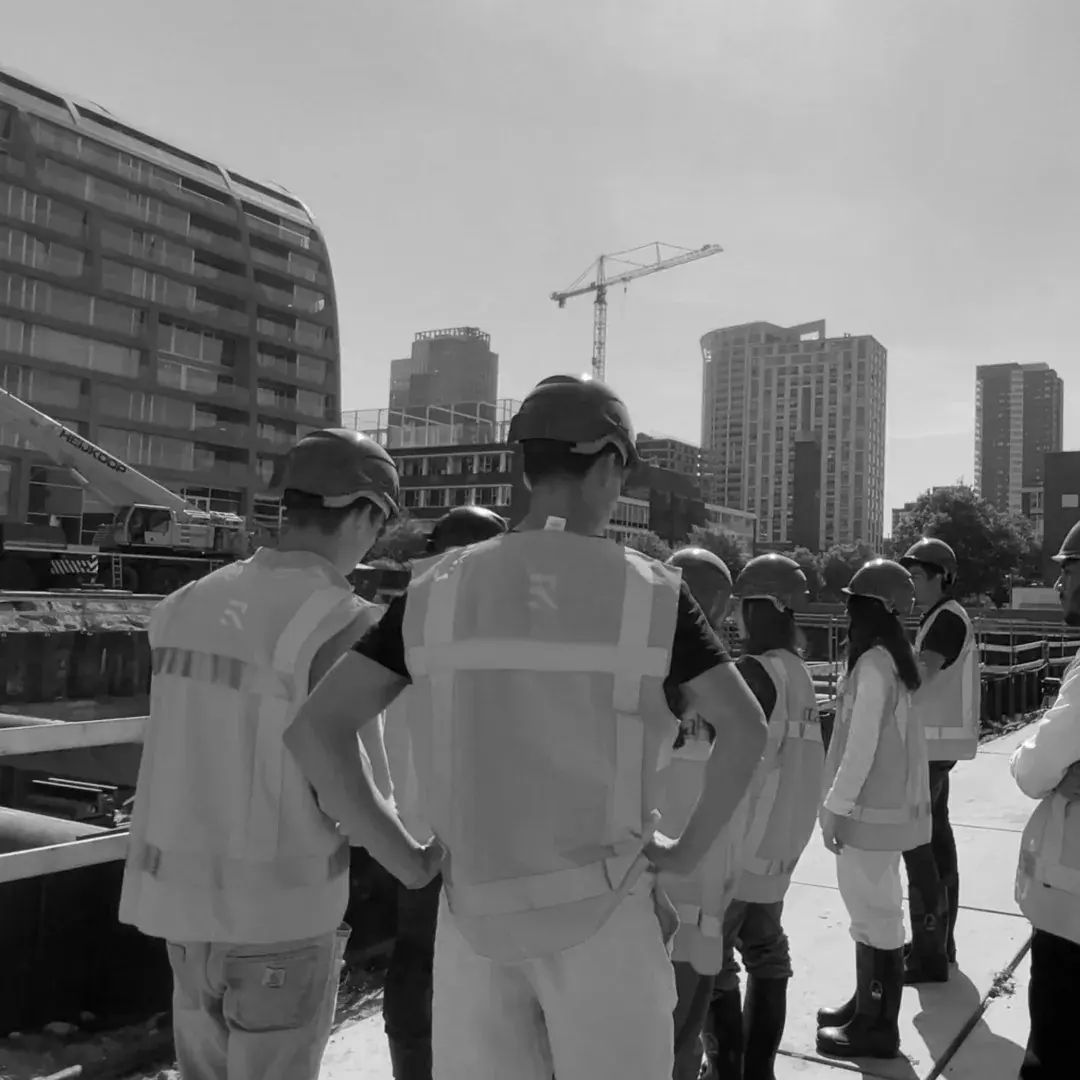
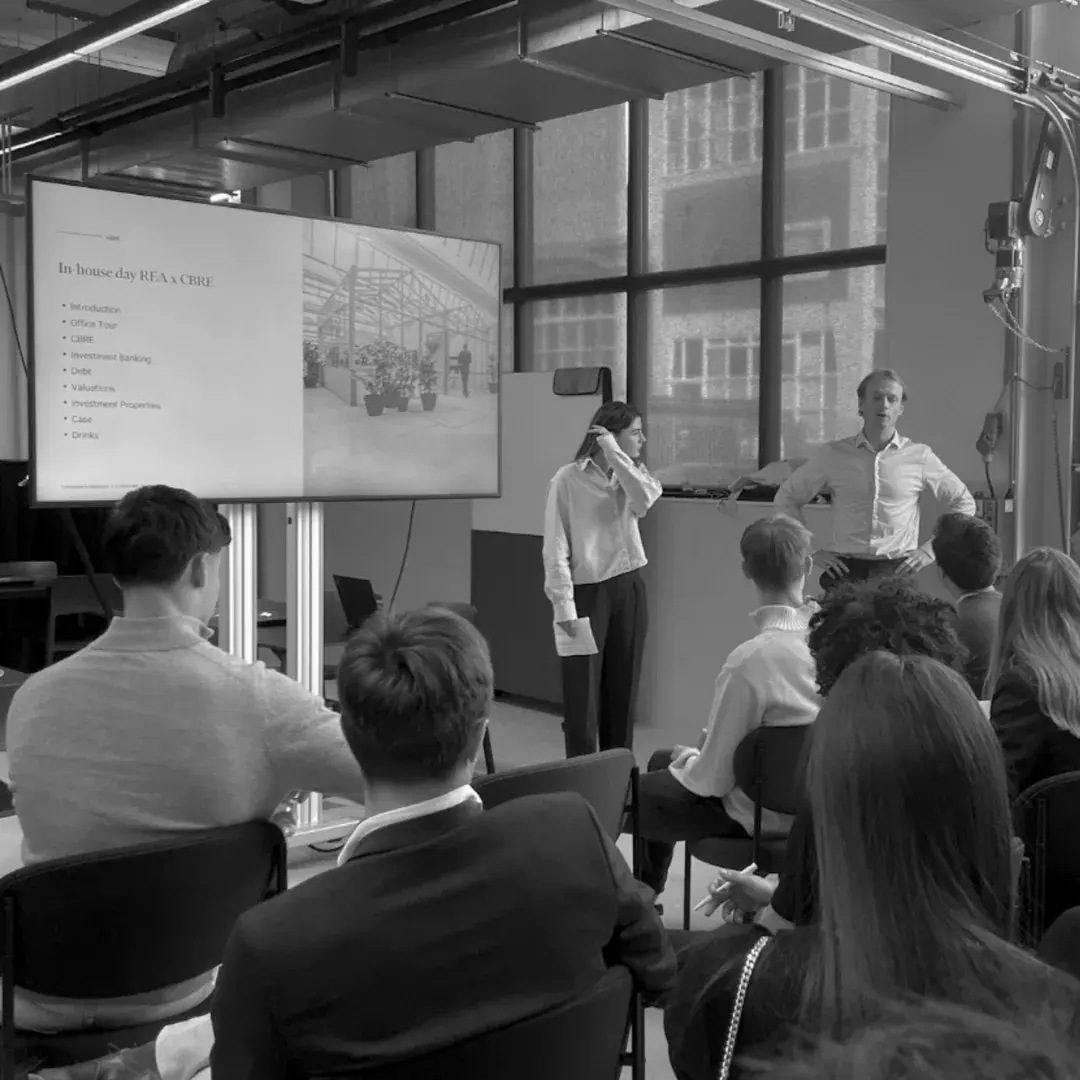
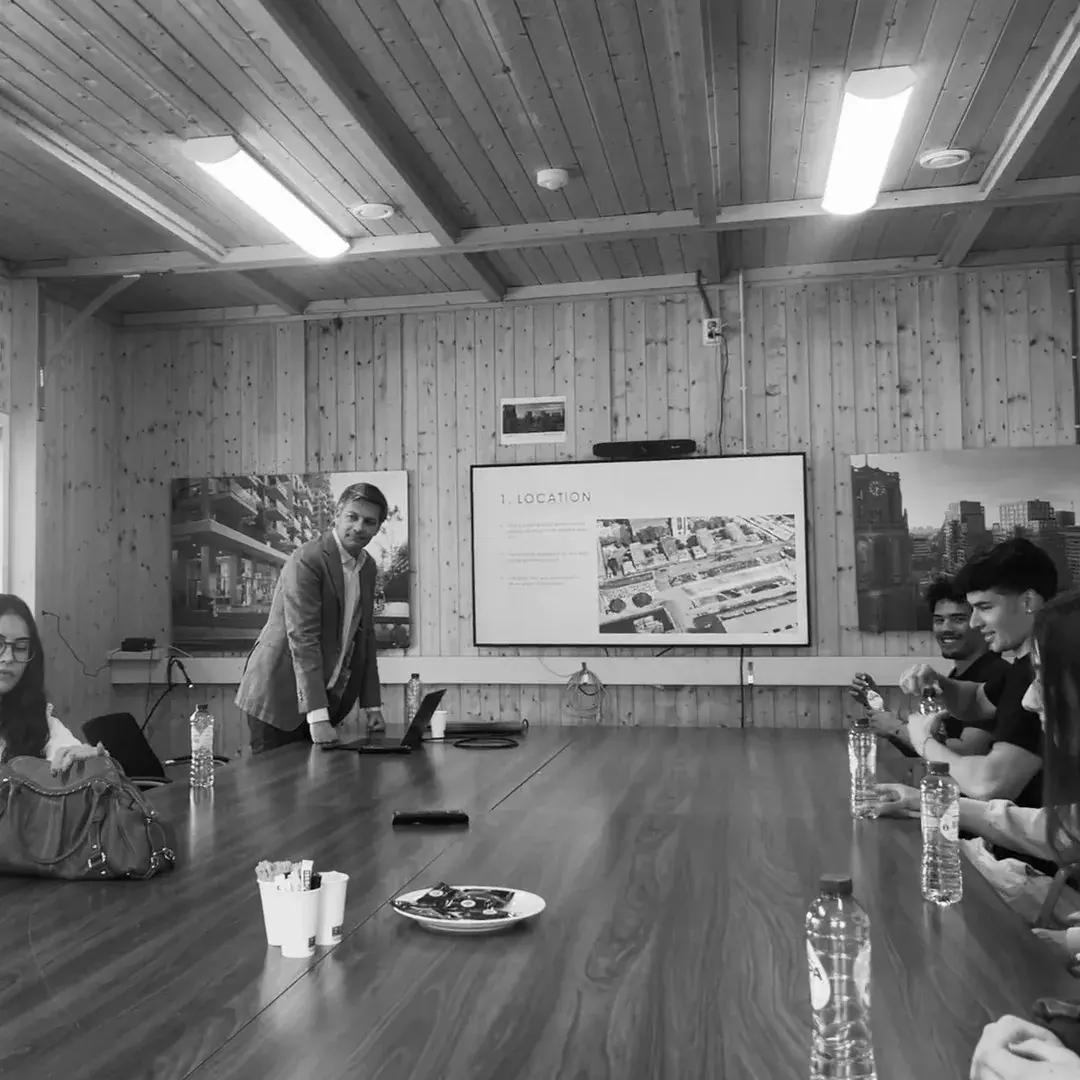
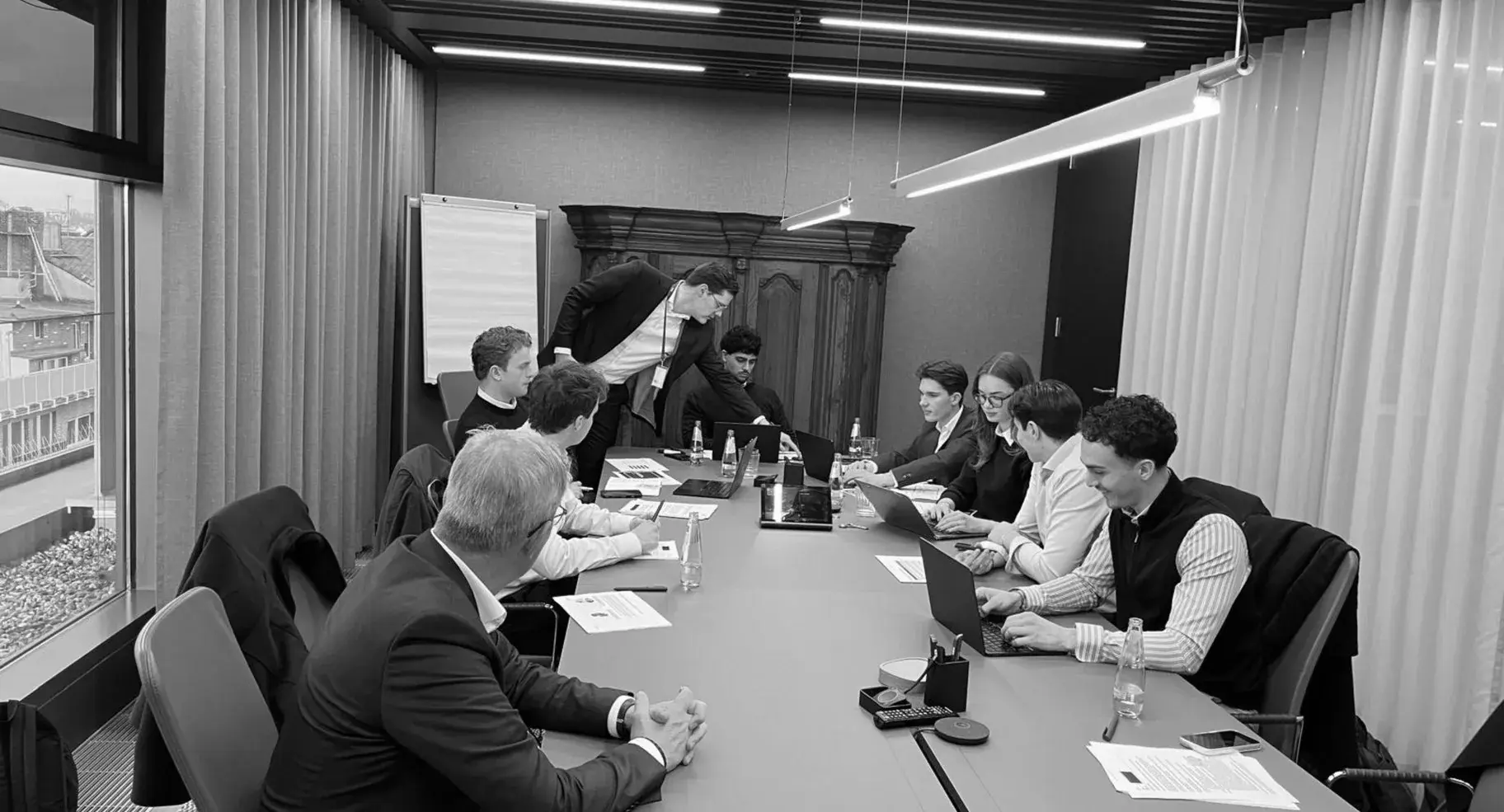
Case studies are built around a specific transaction or case prepared by a partner firm. Members receive a defined brief – often based on a real or adapted investment, financing or development scenario – and are asked to work through it individually or in small teams.
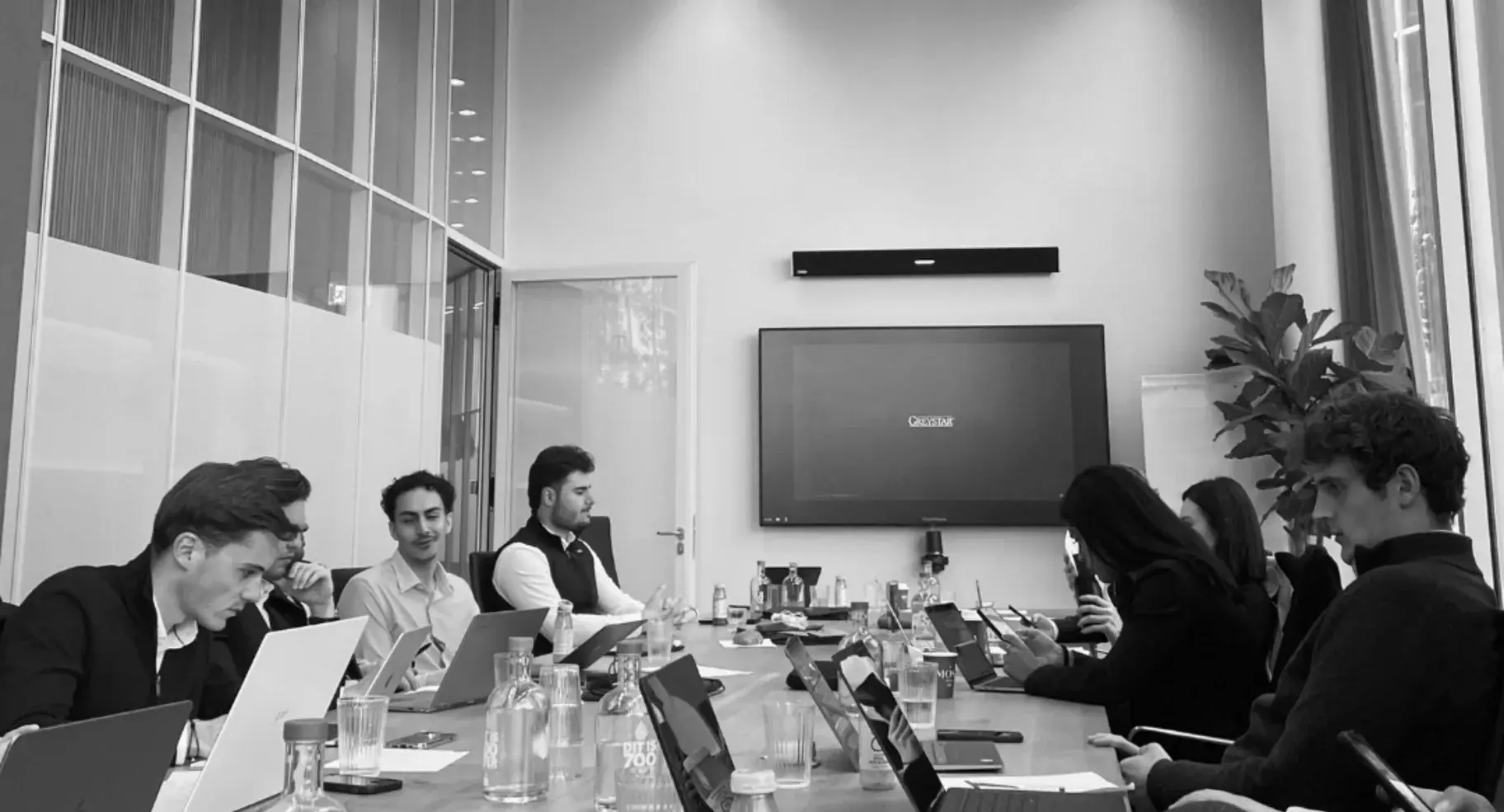

From case to presentation
The format can vary considerably. Members might analyse an acquisition, underwrite an asset, compare different strategies or develop a recommendation based on the information provided.
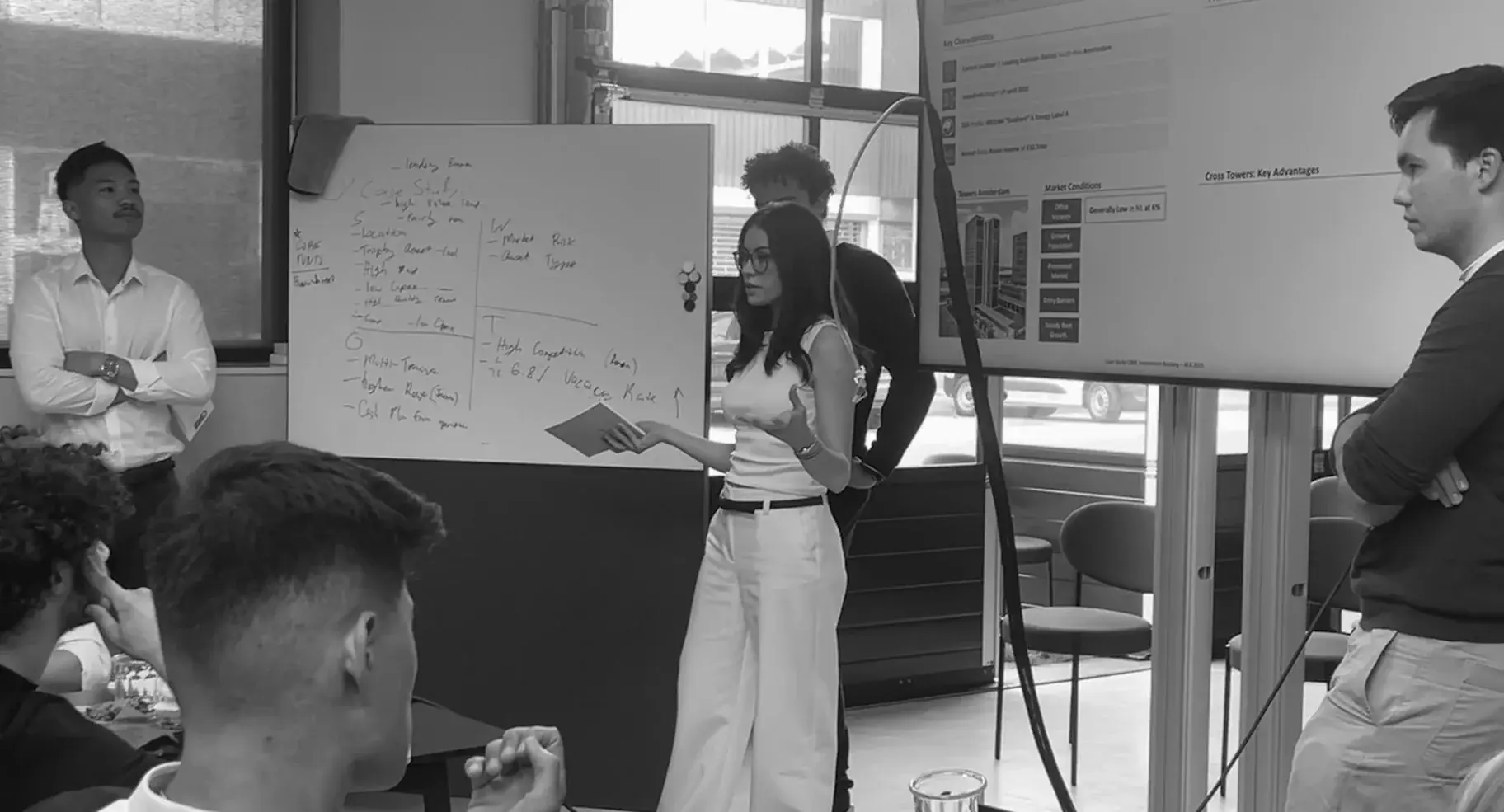
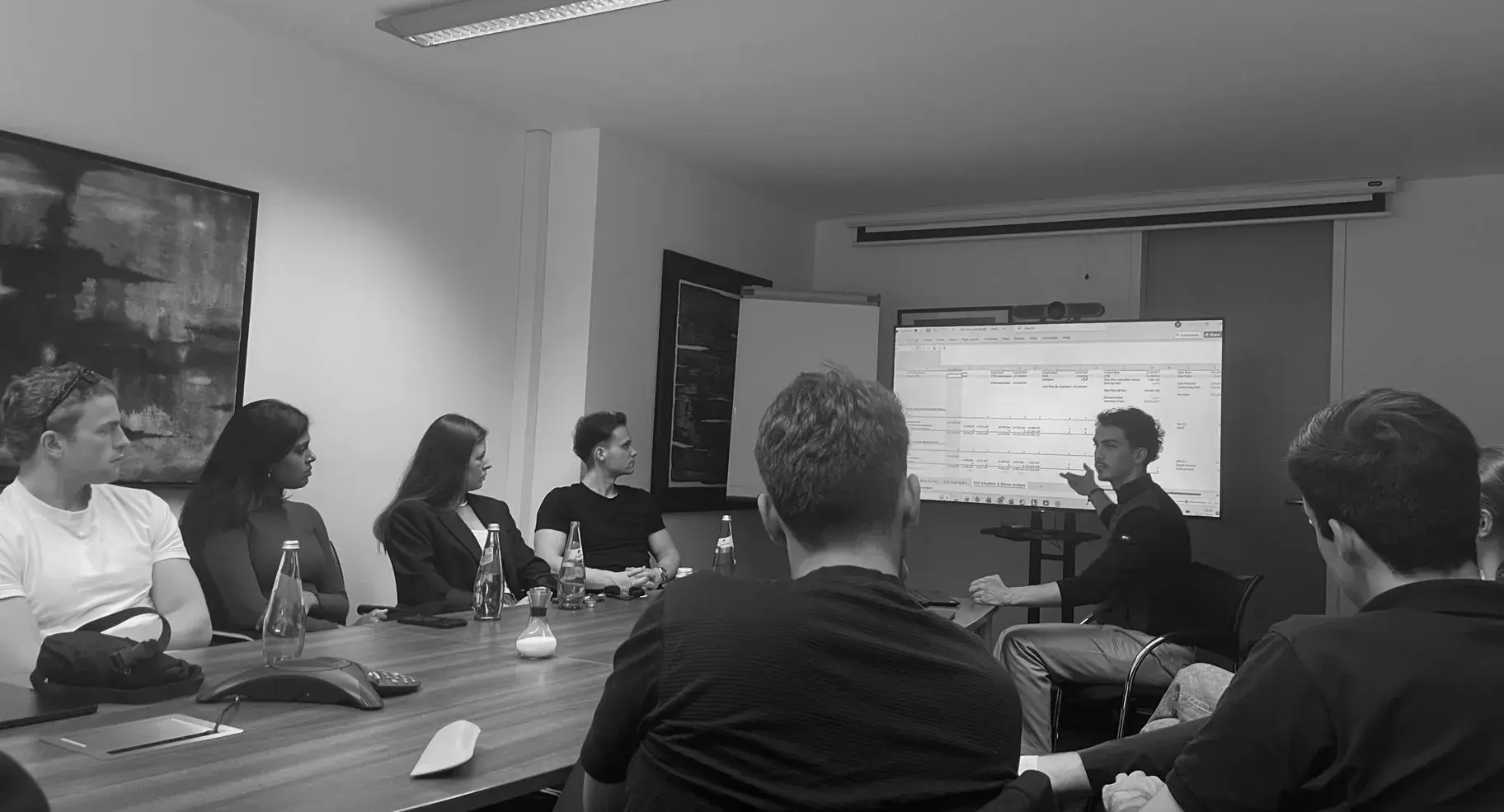
After working through the case, teams typically present their approach and conclusions back to the professionals hosting the session. This is followed by questions, discussion and feedback on both the analysis and the thinking behind it.
Putting skills into practice
For members, the value is straightforward: apply what you know to a realistic situation, explain your reasoning and learn directly from people doing this work every day. For firms, it creates a close and natural setting to see REA members at work – how they analyse information, structure an argument, collaborate and present their conclusions.
That makes case studies particularly valuable on both sides: highly practical for members, and a strong way for firms to engage directly with the talent in the room.